
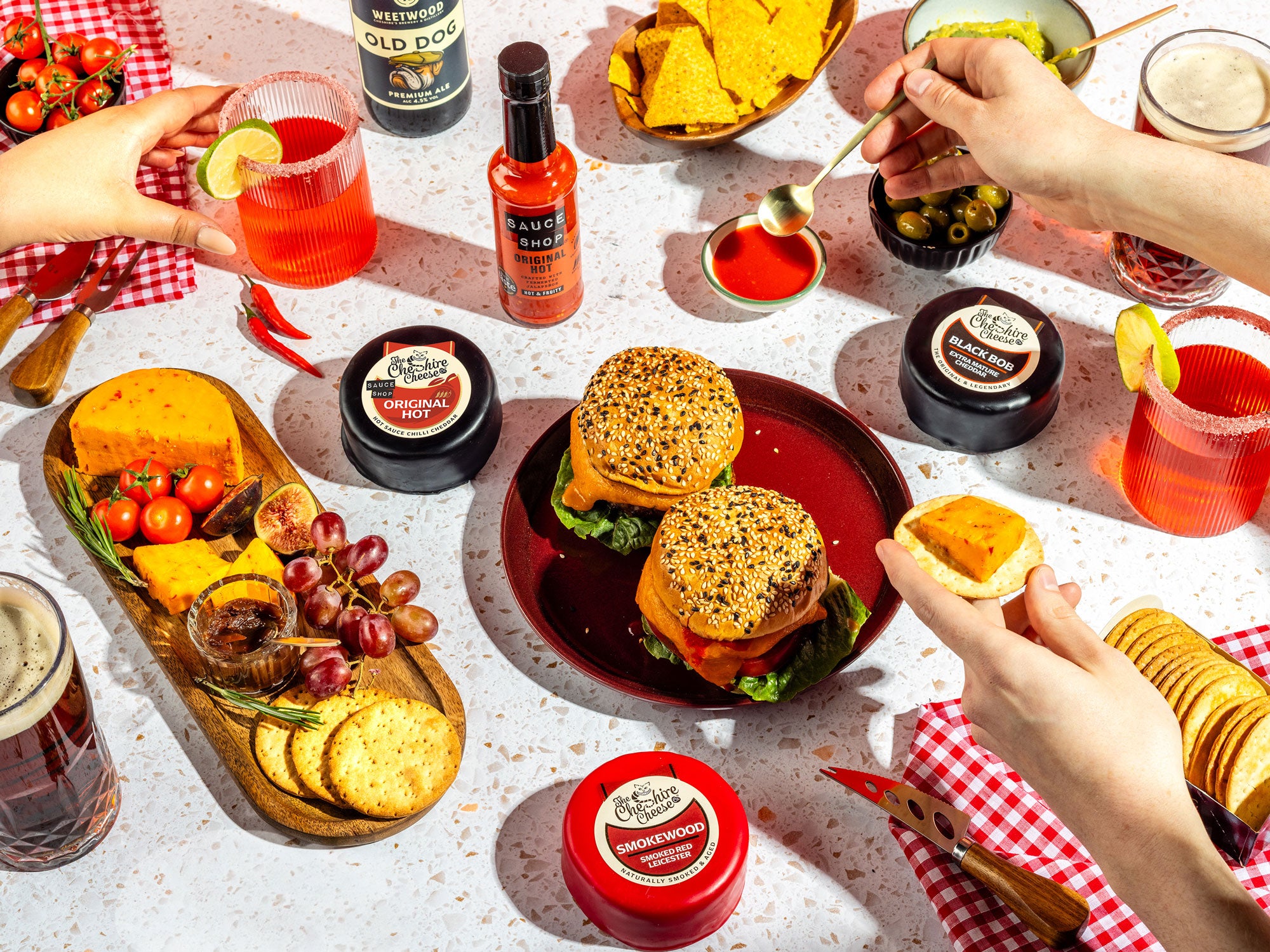

How Many Cheeses Should Be on a Cheese Board?
How Many Cheeses Should Be on a Cheese Board? Cheese tradition suggests that a good cheese board should contain at least three contrasting cheeses: a hard cheese, a soft cheese and a blue cheese. This balance of textures and flavours offers a complete cheese board experience. While three cheeses are a great starting point, you don’t need to stop there. Adding one or two extra varieties can elevate your cheese board into a true centrepiece, without overwhelming your guests’ palates. Read on for expert tips on creating a stunning cheese board for entertaining. The Perfect Cheese Board Selection Visiting a supermarket cheese counter or specialist cheese shop can be overwhelming, especially if you are new to building a cheese board. To make things easier, we offer a handpicked cheeseboard bundle featuring perfectly balanced cheese selections. Alternatively, understanding a few classic cheese styles will help you confidently build a beautiful and well-balanced cheese board at home. Types of Cheese to Include on a Cheese Board Hard Cheeses Popular hard cheeses include Manchego, Gruyère, Parmigiano Reggiano and Gouda. A well-aged Cheddar remains a favourite choice and is always a crowd-pleaser on any cheese board. Blue Cheeses Stilton is often considered the classic blue cheese, but other excellent options include Gorgonzola, Roquefort and Saint Agur Blue. These cheeses add depth and bold flavour to your board. Soft Cheeses Soft cheeses are perfect for spreading on crusty bread. Brie and Camembert are iconic French choices, while Chèvre, Neufchâtel and Greek Feta also deserve a place on a well-rounded cheese board. For the best flavour, remove cheese from the fridge at least 30 minutes before serving to allow it to reach room temperature. How Much Cheese Should You Serve Per Person? As a general guide, allow around 70 grams of cheese per person. This amount works well for cheese boards served before or alongside other dishes. Cheese Board Accompaniments A truly impressive cheese board includes carefully chosen accompaniments that enhance the flavour of the cheeses. Essential items include crackers, breadsticks or crusty bread. You can also add fresh fruit such as apples or berries, along with dried fruits like apricots and figs for sweetness. Popular extras include olives, fruit preserves, candied nuts, pickled peppers, caramelised onions, olive oil and honey for drizzling. For parties and gatherings, consider pairing your cheese board with cured meats to create a complete charcuterie board. How to Present a Cheese Board Cheese boards should be as visually appealing as they are delicious. Use cheeses of different shapes and sizes, and choose a large board that allows each cheese to stand out. Garnish with fruit, herbs or nuts for colour and texture. A well-presented cheese board makes an eye-catching centrepiece for any table. Join Our Cheese Club Join the Cheese Club to receive our newsletter, recipes and serving ideas. Members enjoy exclusive discounts and a special birthday voucher.

What's The Difference Between Mild, Medium and Sharp Cheddar?
What's The Difference Between Mild, Medium and Sharp Cheddar? The flavour of Cheddar cheese ranges from rich and mellow to a tangy umami. All Cheddar cheese combines the same basic ingredients—milk, salt, enzymes, and bacterial culture. Ageing the cheese allows a more complex flavour to develop, creating different tastes. Read on to learn more about the mild, medium, and sharp Cheddar flavour varieties and how they are created. The Cheddar cheese-making process Originally, Cheddar cheese was made in < a href="https://en.wikipedia.org/wiki/Somerset">Somerset, South West England, by farmers using milk from dairy cows. Along with lush pasture, this part of the West Country near the Cheddar Gorge also had caves, which provided a constant temperature and moisture level ideal for storing cheese. In a process called cheddaring, salt was added to the cheese curds, which were then stacked and restacked to encourage the liquid whey to drain. The longer the cheese was stored, the drier and more flavoursome it became. The change to large-scale production of Cheddar Before industrialisation, this would have been a time-consuming and labour-intensive process. However, in the nineteenth century, Joseph Harding mechanised the Cheddar-making process, allowing consistent-quality Cheddar cheese to be made on a large scale. Joseph Harding popularised Cheddar beyond the UK by taking his methods to the USA, specifically Vermont and New Zealand. This more sophisticated production method enabled farmers and other cheesemakers to produce different categories of Cheddar. Some cheese would be sold quite young, while others would be aged and then sold at a higher price as prized mature, extra mature, or vintage Cheddar. The characteristics of mild Cheddar cheese Mild Cheddar cheese is sold and eaten after being aged for a few months. This fast turnover makes mild Cheddar a budget-friendly choice. Taste It has a mild, creamy flavour without the sharp edge of more mature cheese and is often used to introduce children to the delicious world of cheese. Texture Mild Cheddar contains more moisture than aged varieties, giving it a buttery, slightly stretchy texture. Serving mild Cheddar cheese Mild Cheddar is ideal for sandwiches and for grilling. Medium Cheddar cheese Medium cheddar cheese is the cheese most frequently bought in supermarkets. It takes up to a year of ageing to develop the characteristics of this type of Cheddar. Taste As the name suggests, medium Cheddar cheese combines buttery flavours with a hint of sharp tanginess. Texture The texture of mild Cheddar is less dry than mature Cheddar but more robust and less elastic than mild. Serving Medium Cheddar cheese This combination of full flavour and smooth, gratable texture makes medium Cheddar ideal for cooking. A medium Cheddar melts down more smoothly than a dry vintage Cheddar cheese without becoming stringy. It adds a fuller flavour to recipes than mild without overwhelming the taste of other ingredients. Popular culinary uses for medium Cheddar include pastry and baked goods, pasta dishes and soups. Medium Cheddar is an ideal companion for fruit and pickles. Aged, vintage, sharp cheddar cheese Mature, sharp Cheddar is aged for at least one year and up to a decade to allow its unique flavour and texture to develop. Like a fine wine, Cheddar has to be aged in perfect conditions to achieve the ideal result, and the expertise required is often reflected in a premium price. Taste Eating well-aged, vintage Cheddar is an entirely different experience from eating a slice of mild Cheddar. The taste of mature Cheddar is sharp, earthy, and full. It combines umami, salt, and complex nutty flavours to create one of the most satisfying flavours in the cheese world. Texture The texture of sharp, mature Cheddar ranges from hard to crumbly. Some vintage Cheddar cheese is dried so thoroughly that cracks appear. Many cheese connoisseurs enjoy the almost crystalline crunch of vintage Cheddar, which is created by the salt crystals used during the cheese-making process. Serving mature Cheddar cheese Although a sharp cheddar could significantly boost the flavour of sauces and other recipes, this noble cheese is traditionally served as a centrepiece on the cheese board. The spectacular taste and texture of aged Cheddar are best enjoyed on a plain cracker or oatcake, which allows the cheese's flavour to take centre stage. Choosing Your Cheddar Whichever flavour profile you choose, you can be sure of a delicious taste sensation when you choose Cheddar. Our range includes a variety of Cheddar cheeses. Find out more on our website here.

How to Open Waxed Cheese
It almost seems a shame to break into the glorious waxed beauty of a Masala Red Leicester or Shamrock Cheddar, but it must be done to enjoy the cheesy perfection within. We have a few tips on carefully opening wax cheese so you eat it at its best.

The Best Fruits to Serve with Cheese: A Seasonal Pairing Guide
Seasonal fruit and cheese pairings are a great way to discover delicious taste combinations and eat more sustainably. Although the British climate means that seasonal fresh fruit can be hard to find in the winter months, there are usually some tasty gems to be found. Here are some ideas for pairing seasonal fruits with cheese.

Does Cheese Give You Nightmares?
We have all heard the old wives' tale that eating cheese before bed will give you nightmares. Some of us may even have turned away from the cheese board after dark to ensure a good night's sleep. What a shame when there is no robust evidence that eating cheese will give you nightmares.

Do You Have To Keep Cheese Truckles in the Fridge?
Cheese truckles are wheels or cylinders of cheese covered with a protective wax coating. Waxing is popular for semi-hard and hard cheeses, such as Cheddar and Gouda. Edam cheese is famously wrapped in an iconic bright red wax coating. These hard cheeses have a low moisture content, and the wax helps to keep them from drying out and losing their flavour.

Does Waxed Cheese Need To Be Refrigerated?
Storing cheese correctly is essential to preserve its flavour and texture and to extend its life. Our delicious cheeses deserve to be kept in their finest condition, and their wax coating plays an essential role. Wax provides such an excellent covering that there is sometimes confusion over whether waxed cheese needs to be refrigerated. Let's look at how to store your cheese to remain delicious for as long as possible.

How Long Can Cheese Be Left Out?
As with all perishable food, cheese should be stored in the fridge at a temperature below 4 degrees centigrade. The low temperature helps slow the ageing process, making the cheese last longer once opened.

How to Store Cheese
Once you start to explore the wonderful world of cheese, you’ll discover that choosing the right cheese is part of the story. Knowing how to store cheese so that you get the most enjoyment from every piece, from start to finish, is another essential part of being a cheese-lover. Read on to find out the best way to store cheese to keep it in good condition after opening, the best ways to store cheese – whether it's opened or unopened – and all you need to know about storing cheese in the refrigerator.

Is Cheddar Cheese healthy to eat daily?
Cheese lovers may struggle to get through the day without a cheese fix, but do you ever think about whether your favourite food is doing you good? When Cheddar cheese was first produced in the English village from which it takes its name, saturated fat content was not a consideration. Cheddar cheese was made from cow's milk produced in the lush Somerset pastures and was an important food source and a means of earning essential income.

Cheese and Wine Pairings: A Layperson’s Guide
Cheese and wine are one of the all-time classic culinary pairings, up there with bread and butter, beef and gravy, a tub of ice cream and a spoon. There is some genuine science behind why cheese and wine work so well together, but you won’t need to explain that to the French.

Can You Freeze Cheese?
Like most foodstuffs, cheese is best eaten fresh, but if you are keen to reduce waste and save money, you may be wondering if you can freeze that leftover cheese from your cheese hamper? The answer is yes - but with a caveat. Many types of cheese can be frozen, but not all will benefit from the experience. Read on to find out which cheeses to freeze and how to store them.